
Ransomware Hit the Land Records: Heres Why You Can't Rely on County Systems to Protect Your Home
- johnpignetti
- Jan 31
- 5 min read
You recorded your deed at the county clerk's office. You've got the paperwork. Everything's official and secure, right?
Not exactly.
Here's what nobody tells you: the very system you're counting on to protect your property title is under constant attack. County recording systems across America are getting hit by ransomware at an alarming rate: and when those databases go dark, your property's entire chain of custody can disappear with them.
The Attack That Left Homebuyers in Limbo
On April 28, 2025, Iowa County, Wisconsin woke up to a nightmare. Hackers had encrypted their entire network: real estate records, deeds, tax processing, land transactions. All of it locked down. The attack deleted "a significant portion" of their system, including backups. Some of that data? Gone forever.

More than a month later, critical systems were still offline. Past tax information, delinquent payment history, essential property records: all inaccessible. Evan Maciejewski found out the hard way when his May 30 home closing got postponed indefinitely. No timeline. No answers. Just waiting while his life was on hold because the county's security failed.
Residents were furious, and rightfully so. County officials couldn't provide basic answers about when services would return. Would it be June? September? Nobody knew.
This isn't some distant theoretical threat. This is happening right now to real people trying to buy homes, sell property, and access their own records.
Your Personal Data Is Already on the Dark Web
Think it's just about system downtime? Think again.
In October 2024, Sheboygan County, Wisconsin got hit with ransomware. Initially, officials assured residents their data was safe. Then in May 2025, a cybersecurity investigation revealed the truth: hackers had stolen sensitive information on nearly 70,000 people. We're talking Social Security numbers, state IDs, driver's licenses, license plate numbers: everything you need to steal someone's identity or commit property fraud.
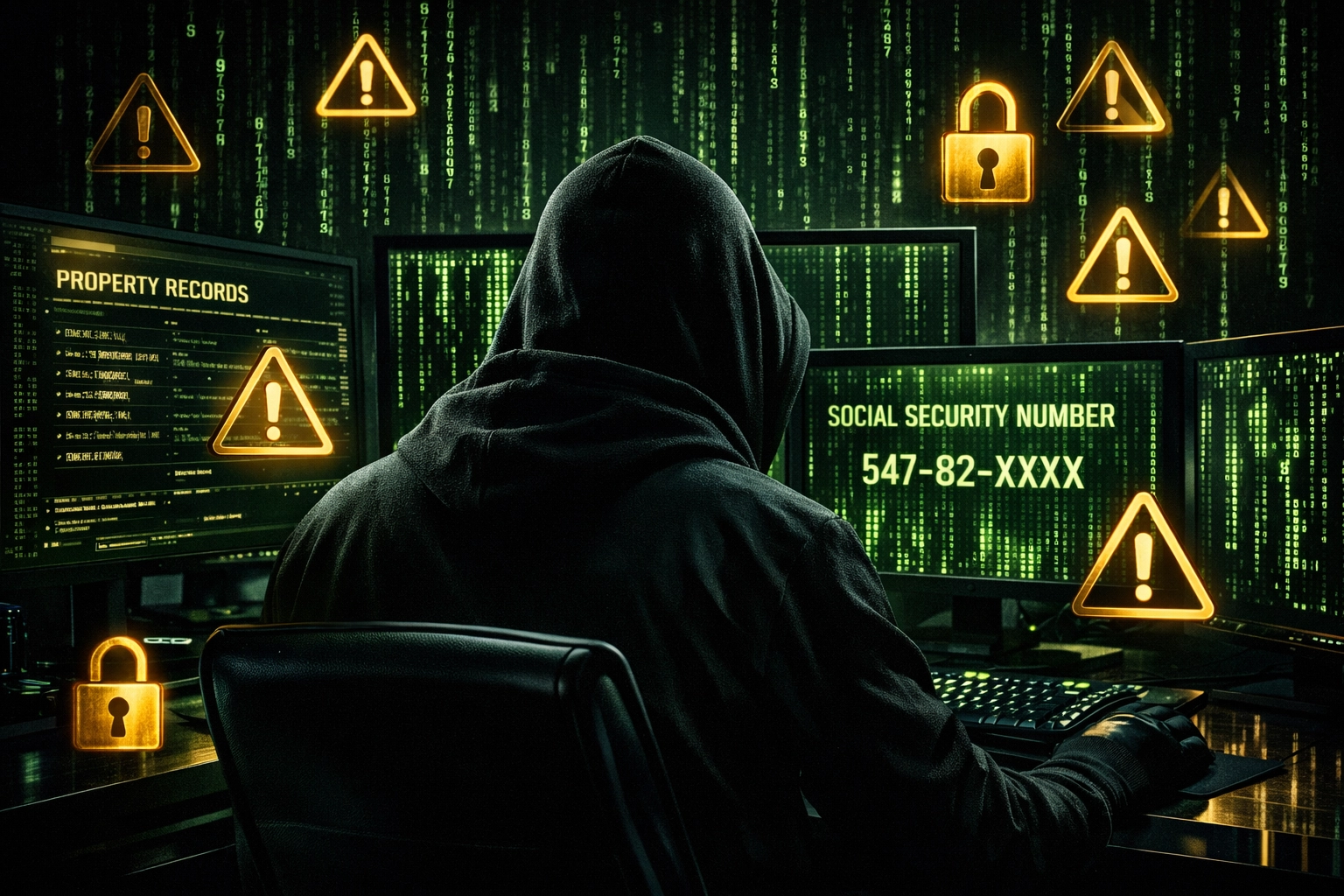
County systems maintain valuable records that fetch serious money on the open market. When attackers encrypt this data, they don't just demand ransom payments. They threaten to sell everything on the dark web. And here's the kicker: even if the county pays the ransom, there's zero guarantee that criminals won't sell your data anyway.
Why County Clerks Are Prime Targets
Let's be clear about why these attacks keep happening: county recording systems are gold mines for cybercriminals.
These databases contain: • Complete property ownership records with legal descriptions • Personal information including Social Security numbers • Financial data from tax records and transaction histories • Vital records that can be used for identity theft • Years or decades of historical data all in one place
According to computer science experts, ransomware attacks can take an entire county government offline for multiple days or disable critical parts of the organization indefinitely. The disruption cascades through every department, affecting not just property records but emergency services, court systems, and public safety infrastructure.
County systems are particularly vulnerable because many operate on outdated technology with limited cybersecurity budgets. IT staff are stretched thin, security patches get delayed, and employee training on phishing attacks is often minimal or nonexistent. One click on a malicious email attachment can bring down the entire network.
What Actually Happens When the Database Goes Dark
Here's what county officials won't tell you upfront: when ransomware hits, the traditional security measures you relied on essentially vanish.
Your recorded deed? It might be encrypted and inaccessible for weeks or months. That means if someone tries to file a fraudulent deed during the chaos, the county can't verify your legitimate ownership because they can't access their own records.

Title companies can't research property histories or complete transactions. Real estate closings get postponed indefinitely. Property sales freeze. Tax assessments can't be processed. Appeals can't be heard. The entire system grinds to a halt.
And if the attackers successfully stole the data before encrypting it? Your property information, personal details, and transaction history are now in criminal hands. Even after the county "recovers," that data is still out there, being traded or sold to other bad actors who can use it for property fraud, identity theft, or targeted scams.
The Recovery Process Nobody Prepared You For
Iowa County is still working through their recovery months after the attack. Despite having some backups, the restoration process has been "time-consuming," with staff manually reconstructing records and trying to piece together what was lost.
Think about what that means for you as a property owner. If there's a dispute about your property boundaries, tax history, or ownership chain, the documentation you need might not exist anymore. Or worse, it might be incomplete or incorrect after the reconstruction process.
County governments are doing their best with limited resources, but cybersecurity simply isn't their core competency. Their mission is recording deeds and maintaining public records: not fighting sophisticated international cybercrime syndicates.
The False Sense of Security
For decades, homeowners have been told that recording your deed at the county clerk's office is all the protection you need. It's the official record. It's backed by the government. What could go wrong?
Everything, as it turns out.
The traditional model assumes that government databases are secure, always accessible, and impossible to manipulate. But in 2026, none of those assumptions hold true anymore. County systems get hacked on a regular basis. Records get encrypted or stolen. Databases go offline for weeks or months at a time.
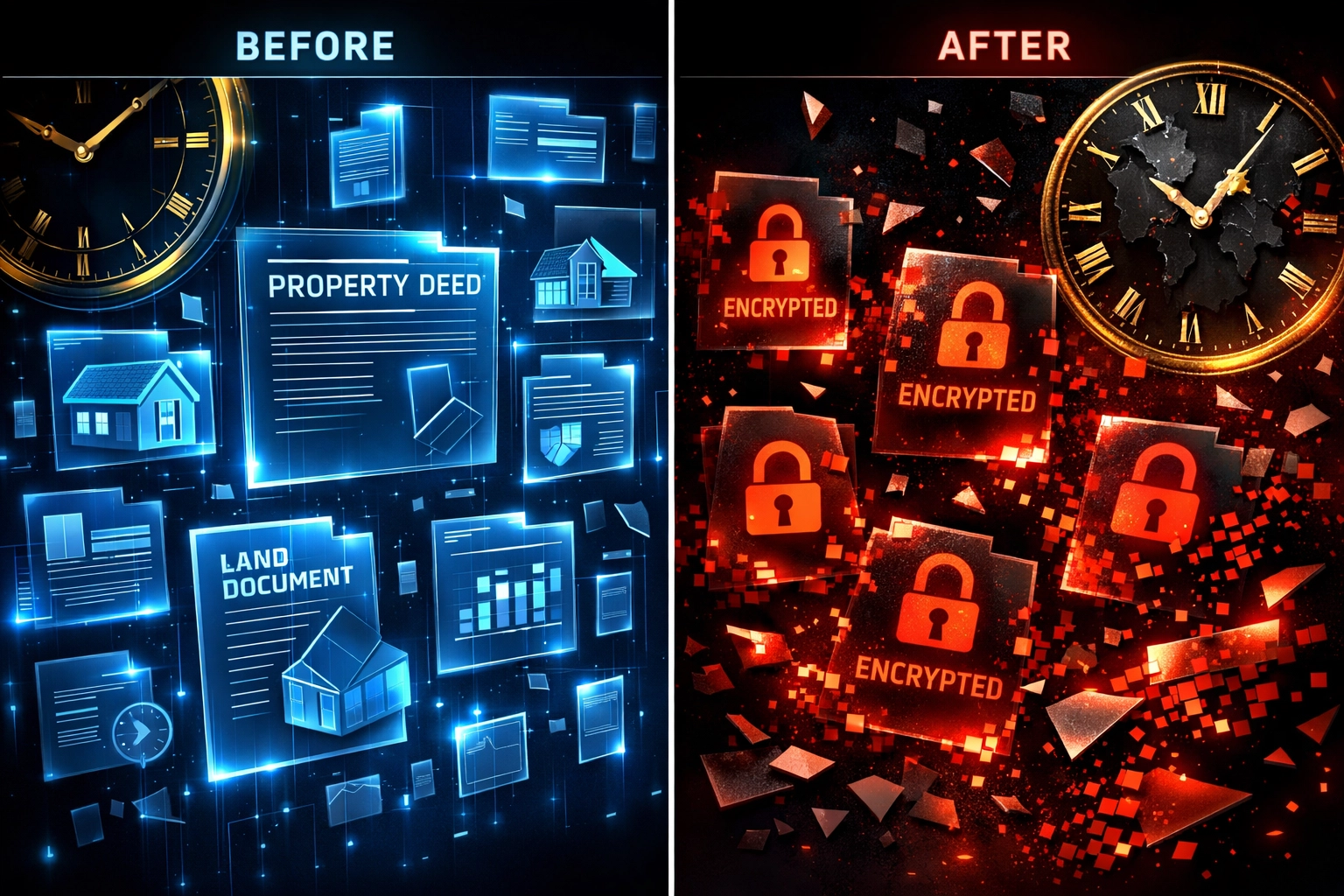
Meanwhile, deed fraud continues to accelerate. Criminals know these systems are vulnerable. They know county recording offices are understaffed and overwhelmed. They know that during a ransomware attack or system outage, there's a window of opportunity where nobody's watching and records can't be verified.
Relying solely on a county database that's a prime target for hackers is like using a single lock on your front door: except the lock is managed by someone else, stored in a building that gets broken into regularly, and you have no control over whether it's even locked at any given moment.
The Protection Layer County Systems Can't Provide
This is exactly why homeowners need security that operates independently of vulnerable government databases. When the county system goes down, when records get encrypted, when data gets stolen: you need protection that's still standing.
At Gold Patrons, we've built our entire mission around being that protective layer. We monitor your property title continuously, regardless of what's happening at the county level. If someone attempts to file a fraudulent deed, we catch it. If unusual activity appears on your title, we alert you immediately. If county systems are compromised, our monitoring doesn't skip a beat.

Our protection doesn't depend on county databases being online or secure. We're watching your property through multiple channels and verification methods. Think of it as the difference between hoping the castle walls hold versus having your own guardian actively defending your home 24/7.
Your Property Deserves Better Than Hope
County clerk offices will eventually recover from ransomware attacks. They'll restore their systems, rebuild their databases, and get back to recording deeds. But while they're down, while they're rebuilding, while they're dealing with the aftermath: who's protecting your property?
The answer shouldn't be "nobody."
You've worked too hard to own your home to leave its security to chance. You deserve protection that doesn't disappear when government systems get hacked. You need monitoring that works even when county databases go dark.
Because here's the reality: ransomware attacks on county systems aren't slowing down. If anything, they're accelerating as criminals realize how vulnerable these systems are and how much valuable data they contain. The next attack could hit your county next week, next month, or tomorrow.
Don't wait until your county makes the news and your property records are locked down by criminals. Get the protection that works regardless of what happens to government databases.
Your home is more than an address. It's your security, your investment, your family's future. Protect it like it matters: because it does.
Secure Your Property Beyond the County System. Learn more about Gold Patrons protection.
Comments